
₹100 a day on ₹10,000 sounds small. In one year it adds up to 365% interest.
AHL AarthDisha | A Financial Awareness Initiative by Arnold Holdings Limited
Lakshmi sells vegetables in a city market. One morning she took ₹10,000 from a local moneylender to buy stock. He told her “just pay ₹100 a day and return the ₹10,000 whenever you can.” She paid ₹100 every single day for a year. That is ₹36,500. And she still owed the full ₹10,000.
Moneylenders, daily interest lenders, unregistered chits and local financiers are often the first place poor families go to for money. They are quick, they don’t ask for papers and they are always nearby. This is exactly why people get stuck.
How these loans keep you paying
- Interest is told per day, week or month, never per year. “₹2 per hundred” a month sounds small, but it is 24% a year. Weekly rates can go above 100% a year.
- You pay only interest. Daily collection covers only the interest, so the main amount never goes down.
- Interest is cut in advance. You take ₹10,000 but get only ₹9,000 in hand. Interest is still charged on ₹10,000.
- No receipts, no records. Without proof, you can’t show how much you have already paid.
- Blank papers, cheques or documents kept with them. These are later used to ask for more money or to put pressure on you.
WHAT IT REALLY COSTS YOU: ₹100 a day on ₹10,000 = 365% a year. 5% a month = 60% a year. 10% a week = 520% a year. A Mudra Shishu loan from a bank or a Self Help Group loan costs only a small part of this.
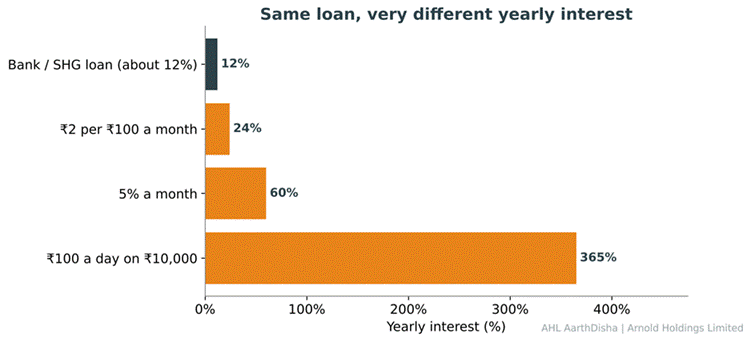
yearly interest of bank or SHG loan versus moneylender rates, up to 365%
Your rights
- In most states a moneylender needs a licence and has to follow the interest limits set by state law. For example, Maharashtra has the Money-Lending (Regulation) Act, 2014. Lending without a licence is an offence.
- The lender has to give you a written account and receipts for what you pay.
- Threats, violence or taking away your things or documents is illegal. You can report it to the local police and to the district Registrar of Money Lenders
- Unregistered groups taking deposits or running illegal schemes can be reported on RBI’s Sachet portal (sachet.rbi.org.in).
AarthDisha guide: getting free from the moneylender
- Always work out the yearly rate. Daily rate x 365, weekly x 52, monthly x 12. Write it down before you agree.
- Open a bank account if you don’t have one. A Jan Dhan account opens the door to bank loans and gives eligible holders a small overdraft facility.
- Join a Self Help Group. SHG members can borrow at much lower rates and build a good record with banks.
- Use government schemes for your business. Street vendors and small traders can ask their bank about Mudra loans (Shishu, up to ₹50,000) and other schemes.
- Already in debt? Try to pay off the main amount, not just interest. Settle in writing and take a receipt for every payment.
- Never sign blank papers or give your original documents or cheques.
AHL AARTHDISHA TIP: The easy loan next door is often the most costly loan in the city. Going to the nearest bank or SHG may take a few more days but it can save you years. Smart Bano, Aage Badho.