
Why Millions of Indians Still Borrow from Moneylenders And How to Break Free
AHL AarthDisha | A Financial Awareness Initiative by Arnold Holdings Limited
You need ₹20,000 urgently. The bank asks for 10 documents and says come back in 15 days. Your neighbour Ramesh says: “Go to Shyamji. He gives money in one hour.” You go. You get the money. But at what cost?
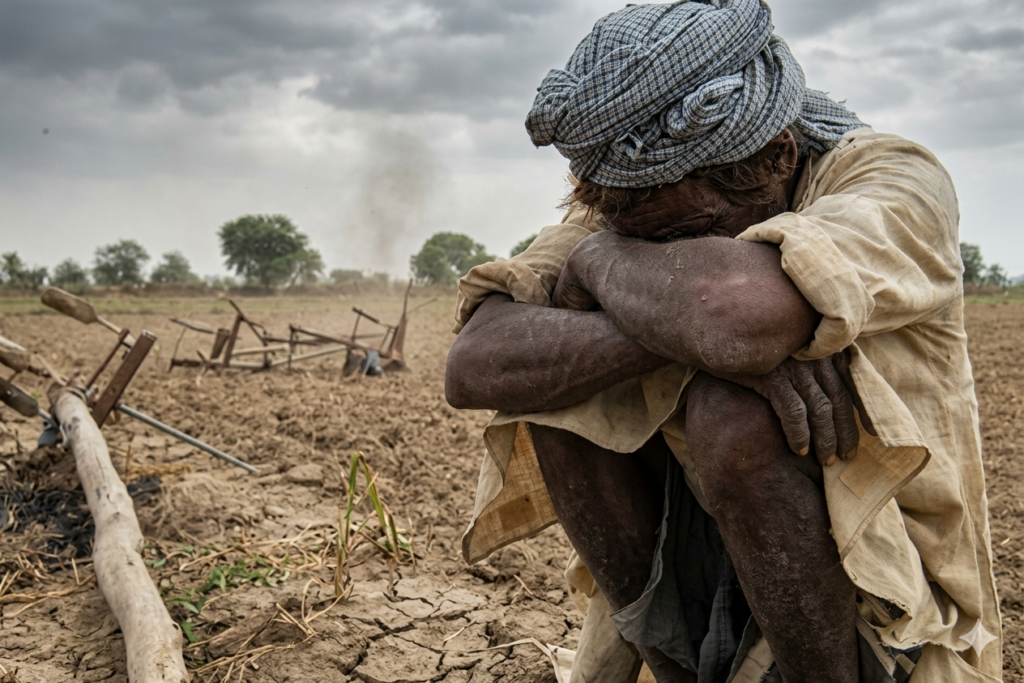
This is the story of millions of Indians farmers, labourers, small traders, and rural households who end up in the grip of private moneylenders (sahukars, banias) and never fully escape.
The Real Problem: What Actually Happens
According to a 2023 study, about one-third of rural households in India still rely on non-institutional sources for credit. Private moneylenders account for nearly 23% of all rural loans. Yet these lenders operate with no regulation, no oversight, and no mercy.
Here is how the trap works:
- You borrow ₹20,000 at “2% per month” — which sounds small. It is actually 24% per year, often compounding.
- Moneylenders in many parts of India charge 10–12% per MONTH — that is over 120% per year.
- They take your original property deed, ATM card, or Aadhaar as ‘collateral’.
- If you miss a payment, interest doubles. Or they fill in a blank cheque you signed.
- One businessman in Andhra Pradesh was forced to transfer 15 properties worth ₹2 crore for a loan of just ₹20 lakh.
- Farmers who cannot repay see their land taken. Families spiral for generations.
| ⚠️ THE PAINFUL TRUTH As a famous saying goes: ‘The Indian farmer is born in debt, lives in debt, and dies in debt.’ In Maharashtra alone, nearly 64% of rural households are indebted — twice the national rural average. Moneylender debt is NOT covered by government loan waiver schemes. Only formal bank loans get waived. The sahukar’s loan follows the family even after the borrower dies. |
Why People Still Go to Moneylenders — The 5 Real Reasons
- Speed — A bank takes 2–4 weeks. A moneylender gives cash in 2 hours. In a medical emergency or a failed crop, 2 hours is all that matters.
- No paperwork — Banks ask for income proof, ID, address, property documents. The moneylender asks for nothing, just your thumb print.
- No credit score needed — If your CIBIL score is low or you have no credit history, no formal lender will touch you. The moneylender does not care.
- Geographic distance — In many villages, the nearest bank branch is 20–30 km away. The moneylender lives on your street.
- Social comfort — The moneylender is known to the family. He attended your family’s wedding. That familiarity feels safe, until it is not.
The AarthDisha Solution: 5 Steps to Break Free
The good news is that the formal financial system now has products designed specifically for people who were left out. Here is what you can do:
STEP 1. Open a Jan Dhan Account Today — This is your first step into formal banking. Jan Dhan accounts have ZERO balance requirement, free RuPay debit card, and ₹10,000 overdraft facility. Visit your nearest bank or India Post office. Bring Aadhaar and a photo. Takes 30 minutes.
STEP 2. Use Pradhan Mantri Mudra Yojana (PMMY) — If you run any small business, a tea stall, vegetable cart, tailoring shop, you can get a loan of ₹50,000 to ₹10 lakh from a bank or MFI WITHOUT collateral. The Shishu loan (up to ₹50,000) is specifically for those with no credit history.
STEP 3. Join a Self-Help Group (SHG) — SHGs are groups of 10–20 women or community members who save together and borrow from a collective pool. Banks link SHGs to credit at 7–12% annual interest. This is the single most powerful tool against moneylenders in rural India.
STEP 4. Build Your Credit History Slowly — Start with a small loan from a microfinance institution (MFI). Repay on time. This builds your CIBIL score. Within 1–2 years, you qualify for formal bank loans.
STEP 5. Know Your Legal Rights — Moneylenders are required by law (in most states) to be licensed and display their interest rates. They CANNOT take your Aadhaar, ATM card, or property deed without a proper agreement. If threatened or harassed, you can report to: Police, RBI Ombudsman (rbi.org.in), or District Collector’s office.
| ✅ AHL ARTHDISHA PROMISE Arnold Holdings Limited is an RBI-registered NBFC with 40+ years of experience in lending. We believe every Indian farmer, labourer, small trader deserves access to fair, transparent, and dignified credit. AHL Samriddhi is our commitment to financial education for those the formal system has left behind. |