How Banks and NBFCs Mis-sell Loan Insurance — and What to Do About It
AHL AarthDisha | A Financial Awareness Initiative by Arnold Holdings Limited
Deepak took a personal loan of ₹5 lakh for ₹3 months of urgent business working capital. The bank’s relationship manager was very helpful. She explained the loan clearly. Then, just before signing, she mentioned a ‘small’ insurance cover ‘just ₹18,000 one-time’ that would ‘protect his family if something happened to him during the loan period.’
Deepak agreed. The ₹18,000 was added to his loan principal so he was now borrowing ₹5,18,000 instead of ₹5,00,000 and paying interest on the extra ₹18,000 too. The insurance lapsed when the loan was repaid early. He received no refund. The coverage was barely useful it only covered death, not job loss or disability, which were his actual risks.
Loan insurance mis-selling is one of the most widespread yet least-reported financial frauds in India. It happens at the point of loan disbursement when the borrower is most vulnerable and is executed with a combination of misinformation and pressure.
The 6 Most Common Loan Insurance Mis-selling Tactics
1. ‘It is mandatory for loan approval’ — The most common lie. Banks cannot legally make loan approval conditional on buying their insurance product. If they say ‘you must take this insurance to get the loan’, it is a direct violation of IRDAI and RBI guidelines. You have the right to refuse.
2. Bundled into the loan without explicit consent — The insurance premium is quietly added to your loan principal. You sign a thick stack of documents and don’t notice the extra amount. By the time you spot it, the loan is already disbursed.
3. Single-premium policies with no refund on prepayment — Most bank-linked loan insurance is a single-premium policy for the full loan tenure. If you prepay the loan in Year 3 of a 10-year tenure, you typically get NO refund of the remaining 7 years of premium. The premium is effectively donated to the bank’s insurance partner.
4. Reducing benefit vs. flat sum assured confusion — Most loan-linked insurance has a ‘reducing cover’ the insured amount decreases as your loan balance decreases. But borrowers are often told about the initial high sum assured (₹50 lakh) without understanding it reduces to ₹5 lakh by Year 9. The family benefit is far less than assumed.
5. Group insurance labelled as personal insurance — Banks sell ‘group insurance’ (their master policy) to borrowers as if it is the borrower’s personal policy. A group policy has far fewer rights the bank can change terms, cancel the master policy, or switch insurance partners without informing individual borrowers.
6. Commission pressure on relationship managers — Bank staff earn significant commissions from insurance sales sometimes higher than their salary. This creates a direct incentive to push insurance onto every loan customer, regardless of the borrower’s actual need.
| 🔴 HOW MUCH IS IT REALLY COSTING YOU? On a ₹20 lakh home loan for 15 years, a bundled insurance premium of ₹80,000 added to the principal costs you ₹80,000 + 15 years of interest at 8.75% = approximately ₹2.1 lakh in total cost. A standalone term insurance policy of ₹20 lakh for 15 years would cost about ₹6,000–₹8,000 per year = ₹90,000–₹1,20,000 over 15 years AND it doesn’t reduce with your loan balance. So you pay MORE and get LESS with the bundled bank product. |
Your Rights Under IRDAI and RBI Rules
- You CANNOT be denied a loan for refusing the bank’s insurance product. This is a clear regulatory violation report it to both RBI and IRDAI.
- You have a 15-day FREE LOOK PERIOD after receiving your insurance policy. During this window, you can cancel the policy and get a full refund including the premium added to your loan principal.
- Banks are required to give you a choice of at least three insurance providers they cannot insist on their in-house or partner insurer.
- You must receive the full policy document not just a certificate within 15 days of purchase. If you don’t, the insurance company is in violation.
- If you believe you were mis-sold insurance, you can file a complaint with: the Insurance Company’s grievance cell, the Insurance Ombudsman (cioins.co.in), or IRDAI’s IGMS portal (igms.irda.gov.in).
The AarthDisha Guide: Protecting Yourself from Insurance Mis-selling
STEP 1. Always ask upfront: ‘Is this insurance mandatory?’ Ask this question verbally AND in writing. If the bank says yes ask them to show you the RBI/IRDAI circular that makes it mandatory. They cannot. Once they know you are informed, the pressure usually stops.
STEP 2. Use your 15-day free look period — If insurance was already bundled in without your understanding, check your loan disbursement letter. Find the insurance company name. Call them and invoke the free look cancellation within 15 days of receiving the policy. Get a written confirmation and ensure the premium is refunded to your loan account.
STEP 3. Buy a separate term insurance policy instead — A pure term insurance policy gives far more coverage at far lower cost than loan-linked insurance. A ₹1 crore term policy for a 35-year-old costs roughly ₹12,000–₹15,000 per year. It covers ALL your liabilities not just one loan and does not reduce over time.
STEP 4. Read every line of your loan sanction letter — The sanction letter will show the exact loan amount approved. If the amount is higher than what you asked for ask why. The difference is often insurance. Refuse it explicitly in writing before signing.
STEP 5. File a complaint if forced — If a bank forces you to buy insurance as a condition of the loan report it to: RBI’s complaint portal cms.rbi.org.in, IRDAI’s IGMS portal igms.irda.gov.in, and the bank’s Nodal Officer. These complaints are taken seriously and banks have been penalised for systematic mis-selling.
| 💡 AHL ARTHDISHA TIP Insurance is important. The right insurance at the right price can protect your family and your assets. But the wrong insurance forced, expensive, and poorly structured is a drain on your finances. The golden rule: NEVER buy any financial product under pressure, at a counter, in a hurry, as part of another transaction. Take it home. Read it. Compare alternatives. Then decide. Good products can wait 24 hours for your informed decision. Anyone who says otherwise is not acting in your interest. |
Recovery Agents Are Terrorising Indian Borrowers — Here Are Your Rights and How to Fight Back
AHL AarthDisha | A Financial Awareness Initiative by Arnold Holdings Limited
Ramesh missed one EMI payment. His bank handed the file to a recovery agency within 10 days. What followed: calls starting at 6:30 AM. Calls to his mother. Calls to his employer. A visit to his office where an agent shouted in the lobby in front of colleagues. A WhatsApp voice note saying ‘we will come to your house with police.’ Late-night doorbell ringing.
Ramesh had not committed a crime. He had missed one EMI. He panicked and borrowed from a moneylender at 3% per month just to make the recovery agents stop.
This is not an isolated story. An in-house survey by Expert Panel found that nearly 39% of borrowers faced abusive recovery calls. RBI data confirms that loan and credit-card related complaints now form the largest share of grievances in the banking system.
What Recovery Agents Are Legally Allowed And NOT Allowed to Do
✅ What is LEGAL (What agents CAN do):
- Contact you by phone between 8 AM and 7 PM only.
- Visit your home or office during daylight hours with prior intimation.
- Show you a valid authorisation letter from the bank and their identity card on demand.
- Inform you of your outstanding amount and repayment options.
- Offer restructuring or settlement options on behalf of the bank.
🚫 What is STRICTLY ILLEGAL (What agents CANNOT do):
- Call you before 8 AM or after 7 PM ever.
- Use abusive, threatening, or humiliating language.
- Contact your family members, employer, or neighbours unless you are completely unreachable.
- Disclose your loan details or default status to any third party.
- Show up at your workplace and create a scene in front of your colleagues.
- Threaten you with arrest or criminal action for a loan default (loan default is a CIVIL matter, not criminal, unless fraud is involved).
- Physically touch you or your property without a court order.
- Send morphed images, defamatory messages, or publicly shame you in any way.
- Hold your documents, ID, or personal belongings hostage.
| 🔴 MYTH BUSTER: CAN YOU BE ARRESTED FOR NOT REPAYING A LOAN? NO. This is the single most dangerous myth that recovery agents exploit. Loan default is a CIVIL matter not a criminal one. You CANNOT be arrested simply for not repaying a loan. The agent’s threat of ‘police action’ or ‘immediate arrest’ is illegal intimidation. The only exceptions are: (1) if you wrote a cheque that bounced which is a criminal offence under Section 138 of the Negotiable Instruments Act, or (2) if you committed deliberate fraud to obtain the loan. Regular EMI default cannot result in your arrest. Period. |
The Legal Framework Protecting You
- RBI Master Circular on Fair Practices Code: Banks and NBFCs are personally responsible for the conduct of their recovery agents. If an agent misbehaves, the bank can be fined.
- RBI Circular BC 21: Prohibits threatening, abusive, or humiliating recovery tactics. Mandates single point of contact. Bans public shaming and third-party disclosure.
- Indian Penal Code (IPC) Section 506: Criminal intimidation by recovery agents is a cognizable offence you can file an FIR.
- Consumer Protection Act, 2019: Harassment by a lender’s agent constitutes deficiency of service. You can claim compensation at a Consumer Court.
- SARFAESI Act, 2002: For secured loans, banks must issue a 60-day notice before taking possession of any pledged asset. You have 60 days to respond and appeal.
Your 5-Step Action Plan When Harassed
STEP 1. Document everything starting now — Save every call log. Screenshot every threatening message. Note the date, time, and content of every visit. This is your evidence. Without documentation, complaints are hard to pursue.
STEP 2. Write a formal complaint to the bank — Send a written complaint (email + registered post) to the bank’s Grievance Officer or Nodal Officer. State the specific incidents with dates. Banks are legally required to respond within 30 days. If they don’t or the harassment continues escalate.
STEP 3. File a complaint with the RBI Ombudsman — Go to cms.rbi.org.in the Centralised Complaint Management System. File a complaint against the bank. This is FREE, online, and effective. RBI takes these seriously and the bank must respond within 30 days or face regulatory action.
STEP 4. File a police FIR if threatened or abused — If the agent has threatened you, used abusive language, shown up at night, or contacted your employer file an FIR at your nearest police station. Cite IPC Section 506 (criminal intimidation) and mention the agent’s name and the bank they represent.
STEP 5. Approach a Consumer Court for compensation — If you have suffered mental harassment, loss of dignity, or professional damage due to a recovery agent’s illegal conduct, file a complaint at the District Consumer Forum. Courts have awarded compensation of ₹50,000–₹5 lakh in such cases against banks.
| ⚡ ONE POWERFUL TRUTH The bank is MORE afraid of the RBI Ombudsman than you are of the recovery agent. A single Ombudsman complaint can trigger a regulatory audit, fine, and public censure against the bank. Recovery agents know this. The moment you say: ‘I have filed a complaint with the RBI Ombudsman complaint reference number [X]’, most legitimate agents immediately back down. Use your rights. They are real, enforceable, and powerful. |
How India’s Microfinance System — Designed to Uplift Women — is Drowning Them Instead
AHL AarthDisha | A Financial Awareness Initiative by Arnold Holdings Limited
Kavitha is a 38-year-old daily wage worker in Karnataka. She has four microfinance loans from three different institutions. Her combined monthly EMI is ₹6,800. Her monthly income: ₹8,500. She has been borrowing from each MFI to repay the other a cycle that has been going on for three years.
Karnataka had to pass a special law in 2024 the Micro Loan and Small Loan (Prevention of Coercive Actions) Bill following a wave of borrower suicides and intense public pressure against coercive MFI recovery tactics.
India’s microfinance sector grew 2,176% in 12 years to reach ₹3.93 lakh crore in outstanding loans as of 2024. About 7.4 crore borrowers have microfinance accounts of which nearly 98% are women. But this explosion of credit has come with a deeply troubling shadow.
The Numbers That Tell the Story of Crisis
- Gross NPAs in microfinance reached 16% by March 2025 nearly double from 8.8% in 2024.
- Portfolio at Risk (loans overdue beyond 31 days) rose 163% to ₹43,075 crore in FY25.
- A survey of 2,000 women in southern and western India found more than 70% had loans from two or more MFIs.
- 50% of women with a single MFI loan had taken it specifically to repay an existing MFI loan.
- More than 70% of women with multiple MFI loans were borrowing to repay previous MFI debts a textbook debt trap.
- Karnataka’s MFI loan book shrank from ₹42,000 crore to ₹34,000 crore in 2024 as the crisis deepened.
| ⚠️ THE SYSTEMIC PROBLEM Microfinance was designed as a tool of financial inclusion to bring credit to those excluded from formal banking. But without adequate credit bureau checks, without limits on the number of simultaneous loans, and with commission-based agents incentivised to lend as much as possible, it has become a debt factory for the poor. The RBI Deputy Governor himself acknowledged the sector suffers from ‘a vicious cycle of over-indebtedness, high interest rates and harsh recovery practices.’ |
Why This Happens: The 5 Structural Failures
1. Multiple lenders, zero coordination — Until 2025, a single borrower could take loans from up to four MFIs simultaneously. Effective January 2025, MFIN reduced this to three lenders and capped total indebtedness at ₹2 lakh including all unsecured loans. But implementation is still a challenge.
2. Group pressure for repayment — MFI loans are often given to self-help groups (SHGs). If one member defaults, the entire group faces recovery pressure. This creates intense social pressure on women to borrow from elsewhere to keep paying even when they cannot afford it.
3. Interest rates disguised as flat rates — MFIs are capped at 22%–24% annual interest but many charge this as a ‘flat rate’ on the original loan amount rather than on the reducing balance. A 22% flat rate is equivalent to about 40% on the reducing balance. Borrowers do not understand this distinction.
4. Coercive recovery by agents — Recovery agents (often local men hired on commission) resort to public shaming, home visits in front of neighbours, shouting, and seizure of household items all illegal, but rampant. Many women pay under duress rather than face community humiliation.
5. Borrowing for consumption, not income generation — Research shows many MFI borrowers use loans for health emergencies, weddings, and household consumption not for income-generating activities. Without income growth, repayment is impossible. MFIs should (but often don’t) assess the purpose and viability of each loan.
Your Rights as a Microfinance Borrower
- You are entitled to a loan card / passbook showing all transactions, interest charges, and outstanding balance.
- Your total indebtedness across all MFIs cannot exceed ₹2 lakh (as of 2025 MFIN norms). If lenders are exceeding this, report to RBI.
- Recovery agents cannot visit your home between 7 PM and 7 AM. Nighttime visits are illegal.
- Group liability loans cannot legally force one member to repay another member’s debt from their personal assets.
- You have the right to file a complaint with the RBI Ombudsman (rbi.org.in) against any NBFC-MFI that harasses, overcharges, or violates your rights.
- Karnataka, Bihar, and several other states have passed specific laws against coercive MFI recovery. Know your state’s protections.
The AarthDisha Guide: Protecting Yourself in Microfinance
STEP 1. Always know your total monthly EMI burden before taking any new loan — Add up every EMI you currently pay MFI, bank, chit fund, anything. Your total EMI should not exceed 40% of your monthly income. If it does, do NOT take another loan.
STEP 2. Ask for the Annual Percentage Rate (APR), not just the interest rate — RBI requires MFIs to disclose the APR the true annualised cost of borrowing including all fees. Ask for this in writing before signing. Compare it across lenders.
STEP 3. Never borrow from an MFI to repay another MFI — This is the single most dangerous thing a borrower can do. It compounds debt without solving it. If you are in this cycle, stop and seek help — contact your district’s Lead Bank Manager or the RBI Ombudsman for restructuring options.
STEP 4. Strengthen your SHG before individual borrowing — An SHG with strong savings history and good internal lending (lending to members from the group’s own savings) is much more powerful than individual MFI loans. Build the savings corpus first; borrow from the group’s corpus at zero or minimal interest before going to external MFIs.
STEP 5. Document every harassment incident — If a recovery agent harasses you take names, note date and time, keep voice recordings if possible. File a written complaint to your MFI’s grievance officer. If no action in 30 days, escalate to the RBI Ombudsman.
| 💡 AHL ARTHDISHA TIP Microfinance can genuinely transform lives but only when used for income-generating activities. A ₹50,000 MFI loan to buy a sewing machine, a ₹30,000 loan to stock a vegetable cart, a ₹1 lakh loan to buy livestock these create income that repays the loan and leaves a surplus. A ₹50,000 loan for a wedding or a medical emergency creates debt without income. The question to ask before EVERY microfinance loan: ‘How will this loan generate the income to repay itself?’ If you cannot answer clearly reconsider. |
Your Bank Told You 8.5%. What They Didn’t Tell You Could Cost You ₹5–10 Lakhs More
AHL AarthDisha | A Financial Awareness Initiative by Arnold Holdings Limited
Anand got a home loan sanctioned at 8.75% per annum. He was thrilled. He signed the papers. But when he got the final loan disbursement letter and compared it to what he expected, the numbers didn’t add up.
Processing fee: ₹18,000. Loan insurance: ₹42,000 (bundled into the loan itself, so he was paying interest on this too). MODT charges: ₹9,200. Legal verification fee: ₹5,000. Valuation fee: ₹3,500. GST on services: ₹9,360. Stamp duty and registration: ₹4,80,000. Total surprise charges on a ₹60 lakh home loan: over ₹5.5 lakh. Nobody told him any of this when they quoted 8.75%.
Home loans in India come with hidden charges that can add 5–10% to your total borrowing cost. Most borrowers discover these only after they have signed when it is too late to renegotiate.
The Complete Map of Hidden Home Loan Charges
1. Processing Fee (0.25%–2% of loan amount)
A ₹60 lakh loan at 1% processing fee = ₹60,000. This is often non-refundable even if your loan is rejected. Banks quote ‘up to 0.5%’ in ads but charge the maximum in practice. Always negotiate this fee it is often waivable, especially for good CIBIL scores above 750.
2. Memorandum of Deposit of Title Deed (MODT) Charges (0.1%–0.5%)
This is the legal charge for depositing your property title deed as security with the lender. On a ₹60 lakh loan, this can be ₹6,000–₹30,000. It varies by state and is often not mentioned until disbursement.
3. Loan Insurance — The Forced Bundle Trap
Many banks ‘bundle’ a home loan protection insurance policy with your loan and add its premium to the loan principal. You end up paying interest on the insurance premium for the entire loan tenure. On a ₹60 lakh loan, the bundled insurance premium can be ₹30,000–₹80,000 and you pay 8.75% annual interest on this amount for 20 years. You have the RIGHT to refuse bundled insurance and purchase a term insurance policy separately (which is cheaper and more flexible).
4. Legal and Technical Verification Fees (₹5,000–₹15,000)
Banks charge for verifying the legal title of your property and conducting a technical appraisal. These are legitimate but must be disclosed upfront. Ask for the breakdown before signing.
5. Stamp Duty and Registration (3%–10% of property value, varies by state)
This is the single largest hidden cost that catches buyers off guard. In Maharashtra, it is 5%–6% of property value. In Delhi, 4%–6%. On a ₹80 lakh flat, this is ₹4–5 lakh that must be paid in cash at registration it cannot usually be covered by the home loan.
6. GST on All Service Fees
18% GST applies on processing fees, legal fees, and insurance services. A ₹30,000 processing fee becomes ₹35,400 with GST. This is often quoted exclusive of GST.
7. Interest Rate Reset — The Existing Borrower Trap
Banks readily increase interest rates for existing borrowers when the repo rate rises. But when rates fall, they quietly give new borrowers better rates while your rate stays high. You must proactively write to your bank requesting a rate reset and pay a conversion fee of about 0.5%–1% to access the lower rate that new customers get automatically. This practice drew severe criticism from RBI.
| 🚨 THE RATE RESET INJUSTICE A borrower who took a home loan in 2018 at 8.5% may still be paying 9.1% in 2025, while new customers get 8.5% again. The difference on a ₹50 lakh outstanding balance is about ₹30,000 per year in extra interest. Over 15 years, that is ₹4.5 lakh wasted simply because the borrower did not know to ask for a rate reset. Always check the current rate for new borrowers at your bank every year and demand parity. |
The Rights RBI Gives Home Loan Borrowers
- NO prepayment penalty on floating-rate home loans this has been the rule since 2012 and reconfirmed in 2025. If your bank charges this, report it to the RBI Ombudsman immediately.
- Right to switch from fixed to floating rate (or vice versa) your bank must allow this for a nominal conversion fee.
- Right to a detailed account statement anytime showing principal outstanding, interest paid to date, and remaining tenure.
- Right to refuse bundled insurance the bank cannot make loan approval conditional on buying their insurance product.
- Right to a complete fee disclosure before signing RBI’s Key Fact Statement (KFS) mandate requires all charges to be disclosed in a standardised format before loan agreement.
The AarthDisha Home Loan Savings Checklist
STEP 1. Always ask for the Key Fact Statement (KFS) — This is a standardised document RBI mandates all banks to provide before loan disbursement. It lists EVERY charge. Read it line by line. Question anything you don’t understand.
STEP 2. Negotiate the processing fee — This is the most negotiable item. If your credit score is above 750, or you are taking a large loan, the bank can waive or halve this fee. Always ask. The worst they can say is no.
STEP 3. Refuse bundled insurance buy term insurance separately — A separate term insurance policy of ₹50 lakh costs about ₹8,000–₹15,000 per year for a 35-year-old. Far cheaper than the bundled policy that gets added to your principal and compounds interest.
STEP 4. Budget for stamp duty separately — Before signing the sale agreement, know exactly what stamp duty your state charges and budget for it in cash. This is the most common financial shock for first-time home buyers.
STEP 5. Check and demand rate reset every year — Every January, check what interest rate your bank offers to new home loan customers. If it is lower than what you are paying, write a formal request for rate reset. Pay the conversion fee if needed the long-term savings are far larger.
| 💡 AHL ARTHDISHA TIP The cheapest home loan is not always the one with the lowest advertised interest rate. It is the one with the lowest TOTAL cost of ownership including all fees, insurance, stamp duty, and the long-term impact of rate resets. Before signing any home loan, calculate the Total Cost of Borrowing using an online home loan EMI calculator that includes all charges. Know your full commitment before you sign. |
India’s Gold Loan Boom is Growing at 87% — But Are Borrowers Being Protected?
AHL AarthDisha | A Financial Awareness Initiative by Arnold Holdings Limited
Sunita’s husband was hospitalised. The family needed ₹1.5 lakh urgently. She took her gold jewellery her mother’s necklace, her own bangles to a nearby gold loan company. The process was quick: 30 minutes, cash in hand, gold pledged. She felt relieved.
Six months later, she had repaid the interest diligently but had not touched the principal. She didn’t realise the product was structured as interest-only the principal was due in a lump sum at the end. She couldn’t pay. The company auctioned her gold.
This story is repeating itself across India at an alarming rate. Gold loans disbursed by banks surged 87% to ₹1.91 lakh crore in just the first eleven months of FY25. The RBI itself has raised serious concerns about irregularities in the sector.
The Gold Loan Trap: How People Lose Their Most Precious Collateral
Gold is not just wealth for most Indian families it is emotion, identity, and security across generations. When it is pledged carelessly and lost to auction, the damage goes far beyond money. Here is where most borrowers go wrong:
- Not understanding the Loan-to-Value (LTV) ratio: RBI caps gold loan LTV at 75%. This means you get at most ₹75,000 for ₹1 lakh worth of gold. Many borrowers don’t know this and expect the full value.
- Bullet repayment shock: Many gold loans are structured as bullet loans you pay only interest every month and must repay the full principal at the end of the tenure. Borrowers think they are repaying the loan when they are only paying interest.
- Auction without proper notice: If you miss repayment, lenders can auction your gold. RBI found weak monitoring and lack of transparency in gold auctions borrowers were often not given adequate warning or opportunity to redeem before auction.
- Repeated pledging and valuation fraud: RBI’s September 2024 audit found mismatched records and instances of the same gold being pledged multiple times a sign of systemic irregularities in some lenders.
- Pressure to take larger loans: Unethical agents push borrowers to take the maximum loan amount possible, increasing their repayment burden and risk of auction.
- Fake gold or under-valuation: Some unscrupulous lenders under-value your genuine gold (giving you less cash) or, rarely, return inferior gold at the end of the loan. Always get an independent purity check.
| ⚠️ THE AUCTION DANGER Under the law, a gold loan lender CAN auction your pledged gold if you default even without going to court. The only protection is prior notice. But RBI found that many lenders were not following proper auction procedures, meaning borrowers lost gold without fair warning. Once auctioned, your gold is GONE. There is no recovery. This is why understanding gold loans fully before pledging is absolutely critical. |
The RBI’s New Rules You Must Know (2025)
- Gold loans are now ONLY allowed against jewellery and ornaments not gold bars, gold ETFs, or gold bullion. This is to prevent misuse.
- LTV must not exceed 75% of the gold’s appraised value. Lenders who exceed this are violating RBI norms.
- Lenders must disclose the full repayment structure including whether it is a bullet loan or amortising loan in simple language BEFORE disbursement.
- The auction process must follow a 30-day notice to the borrower with a clear opportunity to redeem before any sale.
- Every borrower must receive a gold appraisal certificate with the purity and weight of their pledged gold.
The AarthDisha Gold Loan Checklist — Before You Pledge
STEP 1. Understand Bullet vs. EMI repayment — Ask specifically: ‘Is this an EMI loan or a bullet loan?’ In a bullet loan, you pay only interest monthly the principal is due in full at the end. In an EMI loan, each payment reduces your principal. Always prefer EMI-based gold loans.
STEP 2. Get an independent gold valuation — Before pledging, visit any BIS hallmarked jeweller and get a written assessment of your gold’s purity and weight. Compare this with what the lender values it at. If there is a big difference walk away.
STEP 3. Ask for the auction clause in writing — Understand: How many days after default can auction happen? What notice will you receive? Can you redeem after auction notice? Get all this in the loan agreement, in writing.
STEP 4. Compare interest rates carefully — Bank gold loan interest rates range from 8.5% to 13% per year. NBFC rates can be 12% to 26% per year. For a ₹1 lakh loan, this is the difference between paying ₹8,500 and ₹26,000 in annual interest. Always compare at least 3 lenders.
STEP 5. Only pledge what you can afford to lose — This sounds harsh but gold is the only collateral that is irreplaceable emotionally. Never pledge gold you absolutely cannot afford to lose (like your mangalsutra or family heirlooms) for discretionary expenses.
STEP 6. Repay principal proactively if it is a bullet loan — Even if the loan structure does not require principal repayment monthly, make partial principal payments when you have extra money. This reduces your final lump sum burden and protects your gold.
| 💡 AHL ARTHDISHA TIP Gold loans are among the cheapest and fastest forms of credit available to ordinary Indians. They are NOT bad products they are misunderstood products. Used correctly with full awareness of repayment structure, valuation, and auction risk a gold loan can bridge a financial emergency better than any personal loan. Used carelessly, it costs you your family’s most treasured possessions. Know the difference. |
Why Education Loans Are Crushing Young India — And What Every Student and Parent Must Know Before Signing
AHL AarthDisha | A Financial Awareness Initiative by Arnold Holdings Limited
Arjun studied hard for four years, graduated with an engineering degree, and entered the job market with a smile — and a ₹12 lakh education loan around his neck. His starting salary: ₹22,000 per month. His EMI: ₹14,000. After rent and food, he had ₹3,000 left for everything else.
Across India, education loans are growing at a rapid pace. Home and education loans were among the few retail segments showing moderate growth even as personal loans slowed in 2024–2025. But growth in education loans also means growth in stress, defaults, and shattered dreams.
The Reality of Education Loans in India
- Interest rates on education loans range from 8.5% to 15.5% depending on the bank, course, and collateral.
- The moratorium period (during study + 6–12 months after) creates a false sense of security — interest keeps accumulating even when you are not paying.
- Many students from low-income families are not aware of subsidised loan schemes available to them.
- Co-borrowers (usually parents) are equally liable — a default can destroy the family’s financial standing.
- Students who pursue courses in arts, humanities, or less-in-demand fields often struggle to find jobs that can service their loan — the ‘degree vs. income’ mismatch.
| ⚠️ THE SILENT INTEREST TRAP If you take a ₹10 lakh education loan at 11% per year and your course is 4 years, by the time you start repaying, the outstanding amount may have grown to ₹14–15 lakh due to interest accumulation during the moratorium. Most students and parents do not account for this. Always calculate the total repayment amount, not just the loan amount. |
Government Schemes Most Students Don’t Know About
1. Central Sector Interest Subsidy Scheme (CSIS)
Students from families with annual income below ₹4.5 lakh are eligible for COMPLETE INTEREST SUBSIDY during the moratorium period on education loans up to ₹7.5 lakh. This means you pay ZERO interest during study years. Most eligible students have no idea this scheme exists.
2. Vidya Lakshmi Portal (vidyalakshmi.co.in)
One portal to apply to multiple banks for education loans simultaneously. Lists 38+ banks and 127+ education loan schemes. Also links to scholarship schemes. Every student should start here.
3. Dr. Ambedkar Interest Subsidy Scheme
For OBC and EBC students pursuing overseas education. Interest subsidy during moratorium period for loans up to ₹20 lakh.
4. Padho Pardesh Scheme
Interest subsidy for minority community students studying abroad. Loans up to ₹20 lakh covered.
The AarthDisha Education Loan Checklist — Before You Sign
1. Calculate the TOTAL repayment amount — Not just the loan amount. Ask the bank to give you a complete repayment schedule showing how much you will pay in total including all interest. Use an EMI calculator online.
2. Check the moratorium clause carefully — Is interest ‘waived’ or just ‘deferred’? Most banks accrue (add) interest during moratorium. Clarify this in writing.
3. Research the placement track record of your college — A ₹10 lakh loan for a course where average starting salary is ₹12,000/month is a dangerous gamble. Research placement data on NIRF rankings and college websites.
4. Explore scholarships BEFORE loans — Apply for every scholarship you are eligible for: NSP (scholarships.gov.in), state government scholarships, private foundation scholarships (Tata, Infosys, etc.). Even a ₹50,000 scholarship reduces your loan burden significantly.
5. Consider a loan with a collateral-free limit — Under the IBA Model Education Loan Scheme, loans up to ₹7.5 lakh are collateral-free. You do NOT need to mortgage your home for a loan below this limit. Many families unnecessarily do this due to bank pressure.
6. Start repaying early — even during study — If you can pay even a small amount during the moratorium (from part-time work or internship stipends), the interest accumulation reduces significantly. Even ₹2,000/month during 4 years of study saves ₹1–2 lakh in total interest.
| 🎯 THE ARTHDISHA BOTTOM LINE An education loan is one of the best investments you can make in your future — IF the degree leads to a career that can comfortably service the debt. The rule of thumb: your starting annual salary should be at least equal to the total loan amount. A ₹8 lakh loan for a course where you will earn ₹8 lakh per year in year one is a manageable investment. A ₹15 lakh loan for a course where you will earn ₹2.4 lakh per year is a financial trap. Know the difference before you borrow. |
Most Indians Don’t Know Their CIBIL Score — And It’s Costing Them Lakhs
AHL AarthDisha | A Financial Awareness Initiative by Arnold Holdings Limited
Priya applied for a home loan. She had been working for 8 years, earning well, and had never defaulted on any loan. Yet her bank rejected her application. The reason: her CIBIL score was 620. She did not even know what a CIBIL score was.
Priya had unknowingly damaged her credit score years ago — by paying only the minimum due on her credit card and by taking a loan for a friend that she co-signed and which he never repaid. Both were reflected in her credit report. Both she did not know about.
This is India’s invisible financial crisis. Millions of people are denied loans or charged higher interest rates because of a three-digit number they have never heard of, never checked, and never understood.
What is a CIBIL Score and Why Does It Matter?
A CIBIL Score (also called a Credit Score) is a 3-digit number ranging from 300 to 900 that summarises your credit history. It is calculated by TransUnion CIBIL and similar agencies (Experian, CRIF, Equifax). Every bank and NBFC in India checks this score before giving you any loan.
What Different Scores Mean:
- 750–900: Excellent — Easiest loan approvals, lowest interest rates
- 700–749: Good — Most loans approved, reasonable rates
- 650–699: Fair — Loans approved but at higher rates, stricter conditions
- 600–649: Poor — Many rejections, very high interest rates if approved
- 300–599: Very Poor — Almost all loan applications rejected
The 5 Things That Secretly Damage Your Credit Score
1. Paying only the minimum due on credit cards — This is the biggest mistake Indians make. The bank shows ‘minimum due’ as small (₹500–₹2,000). But the unpaid balance keeps accumulating interest at 36–42% per year. And it signals poor repayment behaviour to CIBIL.
2. Being a loan guarantor for someone else — If your friend or relative defaults on a loan you co-signed or guaranteed, it destroys YOUR credit score — even though you did not borrow the money yourself.
3. Multiple loan applications in a short time — Every time you apply for a loan, the lender makes a ‘hard inquiry’ on your CIBIL report. Multiple applications in 3–6 months signal desperation and lower your score significantly.
4. Irregular EMI payments — even by 1 day — One missed EMI stays on your credit record for 7 years. Even a 30-day delay is marked as a ‘late payment’ and damages your score.
5. High Credit Utilisation — If your credit card limit is ₹1 lakh and you regularly use ₹80,000–₹90,000 of it, your credit utilisation ratio is 80–90%. Anything above 30% starts hurting your score.
How to Check Your CIBIL Score — Free
You are entitled to one free credit report per year from each credit bureau. Here is how:
- Visit www.cibil.com—click ‘Get Free CIBIL Score’
- Verify with your PAN card and mobile number
- Review your full credit report — look for errors, unknown loans, or fraudulent accounts
- If you find an error, file a dispute directly on the CIBIL website—errors are more common than you think
How to Build and Repair Your CIBIL Score
STEP 1. Always pay the FULL outstanding on credit cards — Never just the minimum. Set up auto-debit for the full outstanding amount.
STEP 2. Never miss an EMI — set standing instructions — Automate all EMI payments from your bank account. Even one missed payment can haunt you for 7 years.
STEP 3. Keep credit utilisation under 30% — If your limit is ₹1 lakh, try not to use more than ₹30,000 at any time.
STEP 4. Start with a secured credit card — If you have no credit history, get a credit card against a Fixed Deposit (FD). This builds your score safely.
STEP 5. Be patient — scores take 6–12 months to improve — There are no shortcuts. Anyone promising to ‘fix your CIBIL score instantly’ for money is a scammer.
| 💡 AHL ARTHDISHA TIP Think of your CIBIL score as your financial passport. Just as a damaged passport makes it hard to travel, a low CIBIL score makes it hard to access loans, credit cards, or even rented homes. The best time to start caring about your credit score was the day you got your first bank account. The second best time is TODAY. |
India’s Predatory Loan App Crisis Real Stories, Real Dangers, and How to Stay Safe
AHL AarthDisha | A Financial Awareness Initiative by Arnold Holdings Limited
Tejash Nayar was a 22-year-old engineering student in Bengaluru. He needed ₹46,000. He downloaded a loan app. He got the money. But when he struggled to repay, the harassment started — calls to his parents, messages to his college friends, threats of public shaming. He could not bear it. He ended his life.
Shivani Rawat, 23, applied for a ₹4,000 loan through an app called Kreditbe because her salary was delayed. The loan was never disbursed. But within a week, she received 10–15 calls demanding ₹9,000 in repayment.
These are not isolated incidents. In Telangana alone, 14,684 loan app-related complaints were received in 2025 with losses surging to ₹92 crore, nearly triple the previous year. A ₹750-crore illegal loan app racket linked to Chinese nationals was busted in Delhi in 2025, using apps like Inst Loan, Maxi Loan, and RupeeGo to steal personal data and blackmail victims.
How These Predatory Apps Work: The 6-Stage Trap
1. Attractive Bait — Pop-up ads and social media posts promise: ‘Instant loan in 5 minutes! No documents! Low interest!’ They target desperate people students with delayed scholarships, housewives, and daily wage workers.
2. App Installation — You install the app. It immediately asks for permission to access your contacts, photos, messages, call logs, and location. You click ‘Allow’ because you need the money.
3. Quick Disbursement — A small amount (₹2,000–₹20,000) is transferred. But hidden fees, upfront insurance charges, and ‘processing fees’ are deducted. You receive much less than applied for.
4. Impossible Repayment Terms — The interest rate is actually 50–100% per year or more. The repayment window is 7–14 days. You cannot possibly repay in time.
5. Harassment Begins — Recovery agents access your contact list. They call your family, friends, employer. They send defamatory messages. They morph your photos and threaten to share them unless you pay more than you borrowed.
6. The Real Fraud — Many victims received NO money at all but were still demanded repayment. It was a data theft and extortion scam from the start.
| 🔴 WHO IS MOST AT RISK? Young people (under 30), students, housewives, and low-income workers are the most targeted. The Telangana Cybercrime Director confirmed that ‘youngsters, students, housewives, and people with limited incomes’ were the most affected groups. The scammers deliberately target the most financially vulnerable and financially illiterate. |
How to Identify a Legitimate vs. Fake Loan App
✅ Signs of a LEGITIMATE loan app:
- The app clearly states which bank or RBI-registered NBFC it operates through.
- The lender appears in RBI’s official list of registered NBFCs at rbi.org.in.
- Clear disclosure of interest rate (APR), processing fee, and repayment schedule BEFORE disbursement.
- Does NOT ask for access to your contacts or photos.
- Has a proper grievance redressal mechanism and physical office address.
🚫 Red flags of a FAKE loan app:
- No mention of any NBFC or bank partner.
- Asks for contact list, photo gallery, or message access upfront.
- Charges a ‘registration fee’ or ‘insurance fee’ before disbursement.
- Repayment period is less than 30 days.
- No physical office address or customer care number.
- Not available on official RBI or government portals.
What To Do If You Are a Victim
STEP 1. Do NOT pay any further money — Paying under threat only invites more harassment. Document all calls and messages as evidence.
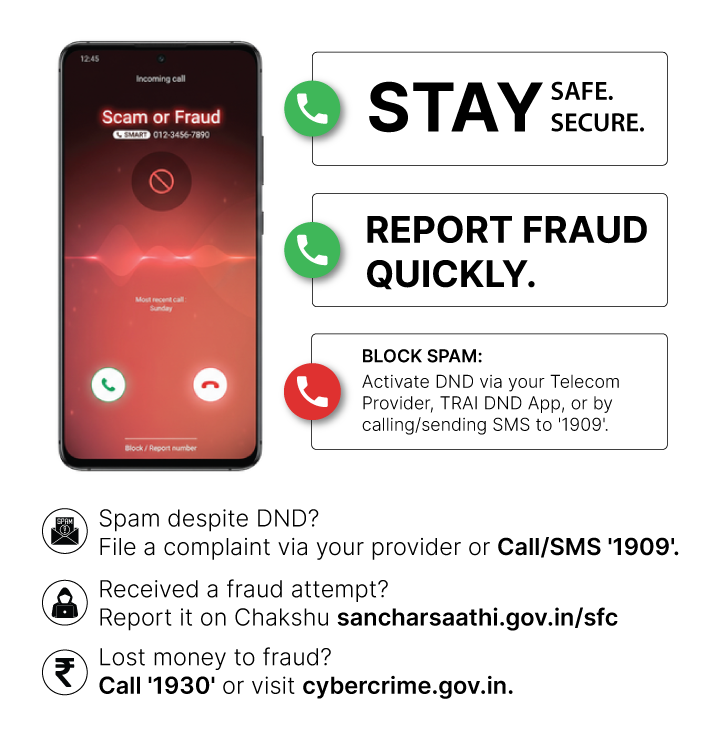
STEP 2. File a complaint at cybercrime.gov.in — This is the national cybercrime reporting portal. Also call the helpline at 1930 (active 24×7 for cyber fraud).
STEP 3. Report to RBI — File a complaint at the RBI Ombudsman portal: cms.rbi.org.in. The RBI has issued Digital Lending Directions 2025 and actively investigates such cases.
STEP 4. Contact your local police — File an FIR at the nearest police station. Mention ‘cheating’, ‘extortion’, and ‘unauthorised data access’. Cyber Cell of police in most districts handles these cases.
STEP 5. Revoke App Permissions — Go to Settings → Apps → the loan app → Permissions → Revoke all. Uninstall immediately.
| 🛡️ THE GOLDEN RULE NEVER borrow from any app that is not linked to an RBI-registered bank or NBFC. Before installing any loan app, go to rbi.org.in and check if the NBFC behind the app is listed. If it is not there — walk away. No matter how desperate the situation. A loan from an illegal app is never a solution. It is the beginning of a nightmare. |
85% of Indebted Indians Spend Over 40% of Their Income on Loan Repayments Are You One of Them?
AHL AarthDisha | A Financial Awareness Initiative by Arnold Holdings Limited
Ramesh earns ₹35,000 a month. His home loan EMI is ₹12,000. His car loan EMI is ₹7,500. He took a personal loan last year for his daughter’s school fees: ₹4,200 more. His credit card minimum payment: ₹2,800. Total EMI outgo every month: ₹26,500. That leaves ₹8,500 for groceries, electricity, school fees, medical needs, and emergencies for a family of four.
Ramesh is not poor. He earns a decent salary. But he is trapped.
A shocking 2025 survey of 10,000 financially stressed borrowers found that 85% of them were spending more than 40% of their monthly income only on EMI repayments. Many had taken new loans just to manage old EMIs what financial experts call a ‘debt snowball’.
How Did We Get Here? The 5 Triggers of EMI Overload
- Easy loan apps and instant credit created a culture of borrowing without thinking.
- Between 2021 and 2024, personal loans by banks grew 75%. NBFCs’ unsecured loan portfolios grew 130%.
- Social media and aspirational lifestyle pressure pushed people to buy things beyond their means.
- An estimated 15–20 million middle-class Indians earning ₹5–30 lakh per year relied on instant loans in 2024, especially in Tier 2 and Tier 3 cities.
- About one-third of millennials and 40% of Gen Z Indians are estimated to be under unsustainable debt burdens.
| 🚨 THE DANGER SIGNAL When you are spending more than 40% of your income on EMIs, you are in the RED ZONE. When you take a new loan to pay an old one, you are in a DEBT TRAP. When you have no emergency fund because every rupee goes to EMIs, one health crisis or job loss away from financial collapse. |
The AarthDisha EMI Health Check
Ask yourself these 5 questions RIGHT NOW:
- What percentage of my monthly take-home income goes toward EMIs? (Safe limit: under 40%)
- Do I have an emergency fund equal to at least 3 months of expenses?
- Am I paying only the minimum due on my credit card each month?
- Have I taken any loan in the last 12 months to repay another loan?
- Do I know the exact interest rate on every loan I have?
If you answered YES to questions 4 or 5, or NO to questions 2 and 3, you need to act now.
The AarthDisha Solution: Your 6-Step Debt Detox Plan
STEP 1. Make a Complete Loan Inventory — Write down every loan: lender name, outstanding balance, monthly EMI, and interest rate. Most people are shocked when they see the full picture.
STEP 2. Attack High-Interest Debt First — Always prioritise paying extra on the highest-interest loan first (usually personal loans and credit cards at 18–36% per year). This is called the Avalanche Method and it saves the most money.
STEP 3. Negotiate With Your Bank — Banks and NBFCs often allow EMI restructuring if you ask. You can request a loan tenure extension (lower EMI), a moratorium (pause payments for 2–3 months), or a one-time settlement if you are severely distressed. RBI mandates that all regulated lenders must have a grievance and restructuring framework.
STEP 4. Stop Taking New Consumer Loans — No new personal loans or credit card debt for 12 months. Use a debit card. Buy only what you can afford with savings. This is hard but non-negotiable.
STEP 5. Use the 50-30-20 Rule — 50% of your income on needs (food, rent, utilities, EMIs). 30% on wants (entertainment, shopping). 20% on savings and emergency fund. If your EMIs alone are above 40%, work backward cut wants completely until the ratio is healthy.
STEP 6. Seek a Credit Counsellor — The RBI has established the Credit Counselling Centre programme. Many banks offer free financial counselling. You can also contact Non-profit organisations like SEWA, Rang De, or local NGOs. They will help you create a debt repayment plan without judgment.
| 💡 AHL ARTHDISHA TIP A loan is a tool like a knife. Used properly, it builds your home, grows your business, and funds your education. Used without discipline, it cuts you. The difference is not the loan; it is the financial literacy of the borrower. That is exactly what AHL AarthDisha exists to build. |
Why Millions of Indians Still Borrow from Moneylenders And How to Break Free
AHL AarthDisha | A Financial Awareness Initiative by Arnold Holdings Limited
You need ₹20,000 urgently. The bank asks for 10 documents and says come back in 15 days. Your neighbour Ramesh says: “Go to Shyamji. He gives money in one hour.” You go. You get the money. But at what cost?
This is the story of millions of Indians farmers, labourers, small traders, and rural households who end up in the grip of private moneylenders (sahukars, banias) and never fully escape.
The Real Problem: What Actually Happens
According to a 2023 study, about one-third of rural households in India still rely on non-institutional sources for credit. Private moneylenders account for nearly 23% of all rural loans. Yet these lenders operate with no regulation, no oversight, and no mercy.
Here is how the trap works:
- You borrow ₹20,000 at “2% per month” — which sounds small. It is actually 24% per year, often compounding.
- Moneylenders in many parts of India charge 10–12% per MONTH — that is over 120% per year.
- They take your original property deed, ATM card, or Aadhaar as ‘collateral’.
- If you miss a payment, interest doubles. Or they fill in a blank cheque you signed.
- One businessman in Andhra Pradesh was forced to transfer 15 properties worth ₹2 crore for a loan of just ₹20 lakh.
- Farmers who cannot repay see their land taken. Families spiral for generations.
| ⚠️ THE PAINFUL TRUTH As a famous saying goes: ‘The Indian farmer is born in debt, lives in debt, and dies in debt.’ In Maharashtra alone, nearly 64% of rural households are indebted — twice the national rural average. Moneylender debt is NOT covered by government loan waiver schemes. Only formal bank loans get waived. The sahukar’s loan follows the family even after the borrower dies. |
Why People Still Go to Moneylenders — The 5 Real Reasons
- Speed — A bank takes 2–4 weeks. A moneylender gives cash in 2 hours. In a medical emergency or a failed crop, 2 hours is all that matters.
- No paperwork — Banks ask for income proof, ID, address, property documents. The moneylender asks for nothing, just your thumb print.
- No credit score needed — If your CIBIL score is low or you have no credit history, no formal lender will touch you. The moneylender does not care.
- Geographic distance — In many villages, the nearest bank branch is 20–30 km away. The moneylender lives on your street.
- Social comfort — The moneylender is known to the family. He attended your family’s wedding. That familiarity feels safe, until it is not.
The AarthDisha Solution: 5 Steps to Break Free
The good news is that the formal financial system now has products designed specifically for people who were left out. Here is what you can do:
STEP 1. Open a Jan Dhan Account Today — This is your first step into formal banking. Jan Dhan accounts have ZERO balance requirement, free RuPay debit card, and ₹10,000 overdraft facility. Visit your nearest bank or India Post office. Bring Aadhaar and a photo. Takes 30 minutes.
STEP 2. Use Pradhan Mantri Mudra Yojana (PMMY) — If you run any small business, a tea stall, vegetable cart, tailoring shop, you can get a loan of ₹50,000 to ₹10 lakh from a bank or MFI WITHOUT collateral. The Shishu loan (up to ₹50,000) is specifically for those with no credit history.
STEP 3. Join a Self-Help Group (SHG) — SHGs are groups of 10–20 women or community members who save together and borrow from a collective pool. Banks link SHGs to credit at 7–12% annual interest. This is the single most powerful tool against moneylenders in rural India.
STEP 4. Build Your Credit History Slowly — Start with a small loan from a microfinance institution (MFI). Repay on time. This builds your CIBIL score. Within 1–2 years, you qualify for formal bank loans.
STEP 5. Know Your Legal Rights — Moneylenders are required by law (in most states) to be licensed and display their interest rates. They CANNOT take your Aadhaar, ATM card, or property deed without a proper agreement. If threatened or harassed, you can report to: Police, RBI Ombudsman (rbi.org.in), or District Collector’s office.
| ✅ AHL ARTHDISHA PROMISE Arnold Holdings Limited is an RBI-registered NBFC with 40+ years of experience in lending. We believe every Indian farmer, labourer, small trader deserves access to fair, transparent, and dignified credit. AHL Samriddhi is our commitment to financial education for those the formal system has left behind. |